If I Had it to Do All Over Again: Do's and Don'ts for the Start of your Journey

Erica Desper

If I Had Our Journey to Do All Over Again, Here is What I Would Tell Myself at the Start...


I am writing this 13 years into my parenting journey and 8 years after I first voiced concern about my son to his teacher in 1st grade. Long, agonizing story short, he was passed on year after year as “too young” and “fine” and “not a behavior problem”. The school evaluations we did manage to secure found nothing aside from some executive functioning deficits that “didn’t require specialized education”. 

Fast forward to 8th grade: he was failing and several independent evaluations determined my son had the following slew of diagnoses:

Autism Level 2
ADHD 
Anxiety
Auditory Processing Disorder
OCD
Dyscalculia (Specific Learning Disability in Math)
Dysgraphia (Developmental Coordination Disorder/DCD) 
Pragmatic Language Deficit
Sensory Processing Disorder
Social Anxiety Communication Disorder
Visual Processing Disorders

While I did the best I could with who I was and what I knew at the time, I did it all “wrong”. I struggle with immense guilt, frustration and regrets. I was trusting and quiet. I allowed others to make me second guess myself. I am choosing to channel all of those feelings into my mission to help other parents and children avoid a similar prolonged journey by bringing you the information and resources you need to do it better and from the start. If I had the journey to do all over again, here is a short list of the most critical things I would tell myself at the start…

Do Trust Your Gut
When my son had to be pried from my body every morning for all of his preschool years, I suspected something was up. Shouldn’t he have adjusted by now? When he couldn’t form his letters correctly, despite loads of practice, when numbers didn’t seem to make sense to him, when he would forget a concept from problem to problem, I knew something was up. I can’t even count the number of friends, family members and professionals who told me I was “just looking for things that were wrong” or “just being a nervous first time mom” or that he was “just giving me a hard time.” My gut knew that he was HAVING a hard time and guess what? I was right, all along. Trust your gut and don’t let anyone make you question it.

Don’t Rely On the District to Guide You
We took advantage of every teacher conference and always brought our concerns to those meetings. No one ever once said, “You can/should/could request an evaluation.” No one even said “I agree you should look into this.” He was good and quiet and smart and could rely on his strengths to get through each day, falling apart as soon as he walked out the door. When I was told by the team that he only needed a 504 and accommodations, I didn’t question it. I mean, they are the experts, right? It’s their duty by law to adequately assess and support every student, correct? Yes, it is. Unfortunately, it is also in their best interests to follow the letter of the law and not offer, suggest or give more than a parent asks for. Educate yourself about what is available and adequate for your child (or seek out someone who knows) and ask for those things explicitly and adamantly. 

Do Be the Squeaky Wheel
Explicit and adamant are not always enough. Unfortunately, special education resources are like a pie and there are far more children who need pie than there are pieces to dole out. If you are concerned about being “nice”, not rocking the boat, about being a bother or annoying, or about creating a contentious situation, your child may not get what they need. Be as loud as it takes, as often as you need to be and for as long as it takes. The squeaky wheel gets the oil.

Don’t Wait and See. EVER. 
I fell hard for the “it’s so early” and “he’s too young” and “we don’t do that here” jargon. While it’s never too late to address deficits and learn new skills, earlier is ALWAYS better in terms of how long it will take and how much effort it will require for your child. Wait and see is code for “I want to pass this scenario down the line”, among other things. 

Do Write Everything Down AND Keep/Organize It
One of my biggest regrets in discussing all of these concerns those first few years verbally and with my son’s teachers. I have zero proof that I ever expressed my concerns to anyone or that they didn’t do anything about those concerns. I’ve spent hours searching for report cards, test results, email correspondence and more. From day one of your gut being triggered, start a chronological log (use a Google doc for example) with entries by date, the most recent being at the top. At minimum, create a file folder in your email account and move all correspondence on this issue to that file. Any concern you want to express, any evaluation or support you want to request, put it in writing with the date and send it to both the teacher and appropriate administrator (email will suffice). 

Don’t Accept “We Don’t Do That Here” As An Answer
If you are told, in response to a request, that “we don’t do that here”, ask them to show you the law in writing. For example, when I asked to record our IEP meeting (which is permissible by law in Pa) I was told I could not. When asked why, the Supervisor of Special Education replied “we don’t do that here.” When my advocate presented her with the law stating that I could she replied, “Well, yes, but we just usually don’t.” Ummm “We prefer not to” is not the same as “by law we do not have to or you are not permitted to.” 

Do Find (& Bring) Your People
I fought SO hard for SO long and, toward the end, I meant business. I created slideshows with data to bring to the meetings. I wrote novels in advance of meetings. I researched signs and symptoms and correlated those with his data. And so on. I got absolutely nowhere until I nearly broke and brought in an advocate. It was then and only then that they truly started listening and put the wheels in motion. I often wonder how our journey would be different had I brought her on from the start or anywhere along the way. We are fortunate in our area to have many excellent private advocates, ones who offer a sliding scale and non-profits who may help advocate at no cost to your family. Even if you simply bring a friend or family member to the table as an extra pair of ears or to take notes, you will be better off. They may have seven people on their side of the in-person or virtual table. That can feel incredibly intimidating when you are the only one on yours. You weren’t meant to parent alone and this journey adds a whole new layer to needing a village. Your friends may never have been in your position of having a child with special needs or having to fight to get them what they need. Find and surround yourself with those who do.

Speaking of needing a village, we’ve got you and, now, you’ve got us. Wherever you are on this journey, learn more about many ways and places, both virtually and in-person, you can connect with experts and parents “who get it” on our Find Your Community page and our Events calendar. 
Find Your Community View Upcoming Local Events Chat With an Advocate

Erica Desper is the Founder of Confident Parenting, which was born in 2011 out of her own challenging entry into parenting and the lack of a village of support to help her navigate it. 


Many years later, after navigating a new struggle to get diagnoses and school supports for her son, she founded the Confident Parenting Collective, a resource to help local families access information and connect with parent recommended providers with availability. Learn more about Erica's mission here.


By Erica Desper March 23, 2026
Explore the PEERS® Program for Middle and High School Students The PEERS® program at Hill Top Preparatory School is a supplemental, evidence-based social skills program designed to empower adolescents and young adults with diverse learning profiles, including Autism, ADHD, anxiety, and other socio-emotional challenges. Developed at UCLA by Dr. Elizabeth Laugeson, this world-renowned program focuses on helping participants achieve success in school, work, and life by equipping them with the social tools needed to thrive. PEERS® for Adolescents is ideal for motivated middle and high school students eager to enhance their social skills, resolve conflicts, and establish lasting friendships. Is PEERS® Right for Your Teen? Participants will develop essential skills to: Build and maintain meaningful friendships Start and sustain conversations Navigate electronic communication Use humor in social interactions Organize social get-togethers Be a good sport in competitive settings Manage disagreements and conflicts Improve social reputation Handle teasing and bullying effectively Program Details This program is designed for students who: Face challenges in making or keeping friends Are interested in developing their social skills Are willing to participate fully in the program Can attend consistently for the full duration Have a supportive parent/guardian willing to engage in the sessions Duration: 14 weeks of 90-minute sessions held once a week in the evening. Structure: Social skills are taught through engaging lessons, role-playing, and real-time socialization practice. Parent Involvement: Concurrent parent/guardian sessions focus on strategies to support their teen’s progress at home. Active parent participation is essential for maximizing the program's impact. Scholarships: There are a limited number of scholarships available for qualified students. Healthy relationships are the foundation of a happy and successful life. This group is designed to empower young adults with the skills they need to create meaningful connections with friends, family, coworkers, and romantic partners. Participants will learn how to communicate effectively, build trust, and foster deeper intimacy in all their relationships. Explore PEERS® Program for College Students & Young Adults In PEERS® for Young Adults, the following skills will be learned and expanded on: Development and maintenance of friendships Improve conversational skills Navigate entering & exiting conversations Use humor appropriately Communicate electronically Improve dating skills Organize social gatherings Handle direct and indirect bullying Manage disagreements effectively Handle dating pressure with confidence Interested? Take the next step today!
By Brianna Matey March 3, 2026
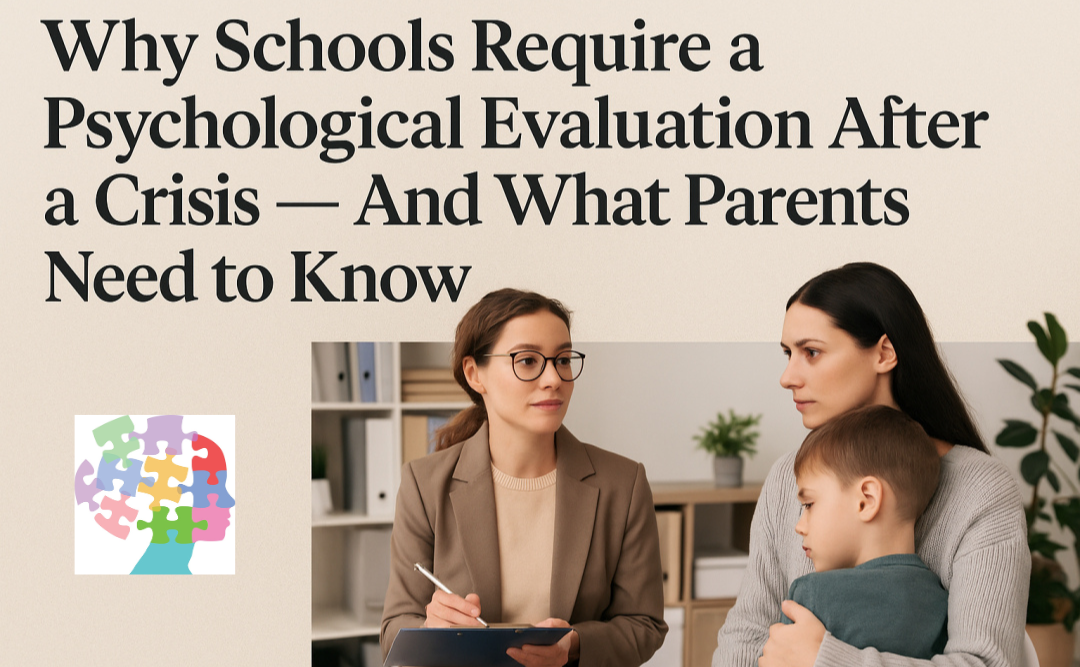
This guest blog from Open Minds Psychological e xplains why schools request mental health evaluations after a behavioral or psychiatric crisis and how families can access fast, trauma-informed, school-compliant assessments. Based in Pennsylvania, Open Minds offers 48-hour turnaround times and specializes in school-ready documentation that helps students return to class safely and with support. When the School Says Your Child Needs a Mental Health Evaluation If you’ve received a call or letter from your child’s school saying they can’t return until they’ve had a psychological evaluation, you’re likely feeling overwhelmed, frustrated, and unsure of what to do next. You’re not alone—and you’re not doing anything wrong. These situations are incredibly stressful, especially when you’re navigating them without a roadmap. At Open Minds Psychological, we specialize in trauma-informed, school-compliant assessments. Let’s walk through why schools make this request, what it means for your child, and what steps you can take to get the support you need, fast. As a team of clinicians who’ve worked with hundreds of children and teens in crisis, we understand both the urgency and the emotion behind school-required evaluations. Many of us are parents ourselves—and all of us believe that a child’s future should never be defined by their hardest moment. “I was afraid my child would be labeled forever. But instead, she felt seen. The clinician actually listened—and the school finally had a plan that made sense.” – Parent, Bucks County According to the American Psychological Association, early re-entry planning after hospitalization significantly reduces school refusal and emotional relapse in students. Ready to get help now? If your school has asked for an evaluation and you’re unsure what to do next, schedule a consultation with Open Minds Psychological today to get clear, expert guidance. Why Schools Request a Psychological Evaluation The Role of Schools in Student Safety Schools have a legal and ethical responsibility to ensure a safe learning environment. When a student experiences a behavioral or emotional crisis—whether that’s a panic attack, aggressive outburst, self-harming comment, or hospitalization—the school may request an evaluation to understand whether it’s safe for the student to return and how best to support them. Q: Why did the school say my child needs a psychological evaluation? A: They’re making sure it’s safe for your child to return and want expert guidance on how to support them. Common Triggers Psychiatric hospitalization or ER visit Suspensions involving threats or aggression Major changes in behavior or emotional state Self-harm or suicidal ideation reported at school Legal & Liability Factors Schools may also be navigating state guidelines or district policies that require formal documentation from a licensed professional before readmitting a student after a behavioral or psychiatric crisis. What Is a High-Risk Psychological Assessment? A Focused, Trauma-Informed Evaluation Unlike standard psychological evaluations, a high-risk assessment is designed to evaluate immediate concerns about a student’s emotional and behavioral stability in a school setting. Q: What exactly is a high-risk psychological assessment? A: It’s a short-term, focused evaluation that checks if your child is ready to go back to school and what support they may need. evaluation that determines if a student is emotionally and behaviorally ready to return to school after a crisis. What It Includes Brief clinical interviews Behavior and risk screenings Review of medical/school documentation Feedback and written recommendations for school reintegration What It Doesn’t Do This isn’t a full diagnostic battery—it won’t label or pathologize your child. Instead, it aims to answer two questions: Is it safe for your child to return to school? What support will help them succeed when they do? Looking for ways to support your teen during this process? Explore our therapy for adolescents page to see how ongoing therapeutic support can help your child feel understood and regain confidence. How to Request a School-Compliant Evaluation: Step-by-Step Get the school’s referral or request in writing – This is usually an email or letter stating that an evaluation is needed. Contact a licensed child psychologist – Prioritize providers experienced in school settings and turnaround within 24–48 hours. Prepare documentation – Include hospital discharge notes, school communication, or prior evaluations. Attend the assessment appointment – Bring your child, and ensure time for both parent and child interviews. Submit the evaluation report to the school – The clinician will provide a formal letter with return-to-school recommendations. Additional Parent Questions (People Also Ask) Q: Can I use my own psychologist instead of the school’s? A: Yes, you can choose your own licensed provider—as long as their report meets the school’s requirements. Families have the right to choose their own licensed provider, as long as the evaluation meets school documentation standards. Q: What if the school pushes back on our evaluation? A: Ask them why—it’s often a formatting issue, and the clinician can usually revise it to fit their policy. to clarify their requirements. A clinician can often revise or supplement the report to meet district criteria. Q: How fast can we get this done? A: Open Minds can usually schedule and complete the full evaluation—including paperwork—within 48 hours., we typically complete high-risk evaluations within 48 hours—including written documentation for the school. Take the next step today: Schedule an appointment or call us to get your child on the path back to school. For a deeper, step-by-step walkthrough, visit our full Psychological Evaluation Guide.
By Erica Desper February 13, 2026
Where Can I Have My Child Evaluated for Autism, ADHD & Giftedness? If you have concerns about your child's development or learning, then you likely already know that many local providers have waitlists as long as 18-24 months for evaluations. As a parent who was once putting my child's name on those lists, I grew frustrated and made it my mission to collect parent recommended resources with minimal wait times who can help families get answers as early as possible. Here are many excellent options to consider.
By Nicole Tran, InStride Therapist February 5, 2026
Thank you to our friends at InStride Health for this guest post! At its core, perfectionism is the tendency to have very high standards for ourselves or others. Not all perfectionism is harmful. Research shows that some perfectionistic behaviors are useful and help young people reach meaningful goals. This adaptive form of striving pushes kids and teens to work hard, take pride in their efforts, and stay flexible when things don’t go exactly as planned. The trouble begins when perfectionism becomes driven by anxiety, guilt, fear of judgment, fear of failure, and shame. Often individuals engaging in problematic perfectionistic behaviors experience fixed thinking and unrealistic expectations. These internal pressures can be relentless and emotionally exhausting, fueling self-criticism, procrastination, and avoidance. And instead of helping kids grow, they slowly shrink the world they feel comfortable living in. Here are some ways problematic perfectionistic behaviors can show up in a young person’s life. School and the Pressure to Get Everything Exactly Right Academic settings are a breeding ground for problematic perfectionistic behaviors. A young person might feel a need for things to be done in a very specific way, redoing steps or checking their work repeatedly to relieve the discomfort of imperfection. Others may delay starting work because beginning feels risky, or finish a task and avoid turning it in because it isn’t perfect. Over time, school becomes less about learning and more about controlling outcomes. Social Life, People-Pleasing, and the Fear of Being Seen Imperfectly Social situations are another area where problematic perfectionistic behaviors can show up. Some young people might overthink what they say, rehearse conversations, or avoid certain social situations altogether. Others become chronic people-pleasers, feeling they need to always be agreeable or helpful. Fears of being judged, embarrassed, or perceived negatively can make them feel they must present a “perfect” version of themselves at all times. This limits friendships, prevents authentic connection, and makes everyday social interactions, like starting conversations, meeting new people, or speaking up, feel stressful. Hobbies, Creativity, and the Loss of Play Perfectionism doesn’t just affect academics or relationships; it can drain the joy out of hobbies and creative activities. Kids and teens may pull back from or even stop doing the things they love, like drawing, playing music or sports, participating in plays, or trying new things because they feel pressure to be the best. They are scared to even try out of fear that they won’t excel right away or become a star, and their world becomes less playful and curious and more fear-driven. Decision-Making and the Fear of Choosing Wrong Another place problematic perfectionistic behaviors show up is in decision-making. Buying gifts, picking out clothes, or deciding where to eat can start to feel overwhelming. Young people may spend so much time thinking through options and trying to find the “best” one that they freeze, avoid choosing, or hand decisions off to others. Avoidance becomes a way of staying “safe.” If they don’t choose, they can’t choose wrong. Unlearning Problematic Perfectionistic Behaviors Because problematic perfectionistic behaviors are learned, they can be unlearned, with the right evidence-based support and practice. At InStride Health, we help young people understand that targeting these behaviors in treatment isn’t about lowering expectations or giving up on values like hard work or trying their best. Instead, it’s about teaching them to notice and name these behaviors and associated thoughts and emotions and then choosing new, more flexible ways to respond. This work includes tolerating imperfections and uncertainty through exposures, engaging with thoughts more flexibly, and building genuine self-compassion. As perfectionism loosens its grip, young people can rediscover the confidence, curiosity, and freedom to try things without needing them to go perfectly. And their world expands again.
By Pat Bergemier March 5, 2025
6 Common Special Needs Planning Missteps & How to Avoid Them Guest Post by Pat Bergmaier, CFP®, ChSNC® Over the years, I’ve met many well-meaning, loving parents who mistakenly assume they’re “all set” when it comes to handling the unique financial needs of their child with special needs, only to find out later that they’ve missed a key step. It’s understandable, but these situations can often be avoided with some proper planning help. Here are some frequent planning missteps to be aware of that could impact the financial future of your child or family member with special needs.
By Erica Desper July 18, 2024
Thank you to Dr. David Danish, President and Psychiatrist at Philadelphia Integrative Psychiatry and Chris Smith, Board Certified Behavior Analyst and Licensed Behavior Specialist for answering this parent question.
By Erica Desper July 16, 2024
Join me in welcoming ABA Centers of Pennsylvania to Bala Cynwyd and Wayne/King of Prussia. They are smashing lengthy local waitlists for autism diagnosis and care, getting children 2-17 years in within 47 days of their initial contact and they work with most major insurances.
By Erica Desper June 3, 2024
Beyond Autism Opens their 3rd Location in Havertown Pa! Beyond Autism is a collaborative center that provides individualized ABA, Speech and Occupational Therapy for children and adolescents diagnosed on the Autism Spectrum. They partner with families living with autism to build a strong foundation for their children in early childhood and beyond and passionately believe that their team inspires and supports change through evidence-based teaching methods and practices. Their newest location recently opened in Havertown and they continue to offer services out of their West Chester and Media locations. Applied Behavior Analysis (ABA) is a scientific, data based field that has utilized principles of learning and behavior for over 30 years to teach children with Autism enhanced social behaviors like self-care, play, motor skills, language, academic, self-help and other living skills. Their typical timeframe to begin services ranges from 2-4 weeks and, best of all, Beyond accepts all major commercial insurances. While they are not a Medicaid provider, they do offer a hardship program for those in need of financial assistance. Beyond offers a variety of service areas which include but are not limited to: Autism Spectrum Disorder Childhood Apraxia of Speech Early Intervention of Speech/Language Delay Expressive and Receptive Language Disorders Fluency/Stuttering Disorders Artic Phonological Disorders Social Skills/Pragmatic Language Deficits Learning Disabilities Augmentative and Alternative Communication (AAC) Feeding and swallowing Their occupational therapy program focuses on providing skilled based services in the following areas: Activities of daily living (i.e dressing, feeding, toileting & tooth brushing) Sensory processing Fine and gross motor skills Self-regulation and social skills Visual motor & perception skills Play and leisure skills Learn more and contact them at the link below and welcome Beyond Autism to the neighborhood!
By Erin Brown, M.Ed, CRC April 18, 2024
Do you have a child who is exploring potential careers and wishes to do more research? Here are my top 3 websites to explore job goals! O*Net Online O*Net Online is a fabulous website that you could spend hours on. Do you have a specific job that you are interested in researching? You can search for it specifically and you can see all of the job duties associated, the education required, salary information, as well as other jobs that are related to that position. You can also explore jobs based on a specific skill set, by professional associations, job duties, etc. The website also designates which jobs are “bright outcomes”, meaning that the industry is growing and therefore jobs will most likely be available in your field. The website also includes a free interest profile which is helpful in narrowing options. Overall, I could spend hours doing research on O*Net! It is my favorite website by far! Pennsylvania’s Center for Workforce Information & Analysis This website provides labor statistics based on information gathered from the state of Pennsylvania and breaks it down by counties. My favorite statistic to explore is the “Top 50 New Hires”. This is updated every quarter, so it has the most up to date information. This list shows the top 50 employers in each county who have hired workers. This list can be beneficial to explore what type of industries are prevalent in the area that you live in or wish to live in, as well to give ideas of employers to explore for potential jobs. You can find an employer and then search their site for the types of jobs that they are hiring for. The information is extremely interesting, especially when comparing different counties. Occupational Outlook Handbook This website is similar to O*Net Online because it also allows you to explore different job goals in a variety of ways including by pay, educational level, projected new jobs, and projected growth rate. This website is developed using the US Bureau of Labor Statistics. There is a video on the home page which gives you information on how to best use the site. It is another great option for you and your child to explore different job goals. The Pennsylvania Office of Vocational Rehabilitation, or OVR, provides vocational rehabilitation services to help persons with disabilities prepare for, obtain or maintain employment.