Erica Desper is the founder of the Center for Confident Parenting, born in 2011 out of her own challenging entry into parenting and the lack of a village of support to help her navigate it. Many years later, after navigating a new struggle to get diagnoses and school supports for her son, she founded the Confident Parenting Collective, a resource to help local families access information and connect with parent recommended resources and providers with availability. Learn more about Erica's mission here.
Where Can I Have My Child Evaluated for Autism, ADHD & Giftedness?
Erica Desper

Where Can I Have My Child Evaluated for Autism, ADHD & Giftedness?
If you have concerns about your child's development or learning, then you likely already know that many local providers have waitlists as long as 18-24 months for evaluations. As a parent who was once putting my child's name on those lists, I grew frustrated and made it my mission to collect parent recommended resources with minimal wait times who can help families get answers as early as possible. Here are many excellent options to consider.

Pediatric Psychology Center of Chester County (Exton, Downingtown & Reading)
In practice since 2013, Erin opened the Pediatric Psychology Center of Chester County in early 2020 to continue her work providing both assessment and treatment of children/families managing a number of developmental and behavioral concerns. Her long-term goal was to develop a unique office that provides a solid medical home for families to receive a variety of clinical services under one roof, and indeed the practice grew much more quickly than expected in an attempt to meet the needs of the community throughout the pandemic.
Erin values the opportunity to provide a solid fit in treatment for each incoming client with as short a wait as possible. At PPCCC, they believe that finding a perfect fit between client and clinician is of utmost importance and will work to make sure that you are expertly matched…even if that means they help connect you with another office.
Open Minds Psychological (Plymouth Meeting & Phoenixville)
Dr. Brianna Matey is the founder of Open Minds Psychological and a clinical psychologist. Dr. Matey started Open Minds Psychological in 2018 as a private practice to provide quality therapeutic and diagnostic services to the community. Dr. Matey has 13+ years experience in community mental health most recently as the VP of Clinical Services of Child Guidance Resource Center. Dr. Matey retained clinical and fiscal oversight of 20+ million in service revenue. Dr. Matey received extensive clinical training in Cognitive Behavioral Therapy while at Philadelphia College of Osteopathic Medicine studying to be a Clinical Psychologist. Dr. Matey is a Licensed Clinical Psychologist and Professional Counselor in PA. Dr. Matey practices as a part of the PsyPact interstate compact.
Dr. Matey's extensive training and experience creates a unique skill set and passion for working with individuals to support needs around emotional regulation, anxiety, depression, trauma and coping skill development. Open Minds also offers psychological evaluations to assess developmental, cognitive, academic, and behavioral needs, high-risk assessment as well as career counseling.

Dr. Lana Shapiro (Center City Philadelphia)
Dr. Lana Schapiro is a Developmental and Behavioral Pediatrician with over ten years of clinical and research experience in leading medical centers such as the Children’s Hospital of Philadelphia (CHOP), the University of Pennsylvania, Montefiore Medical Center, Cohen Children’s Hospital and with extensive experience in the field. Most recently an Associate Professor of Pediatrics at the Perelman School of Medicine in the University of Pennsylvania, she brings both personal and professional experience in the field to approach each child and family holistically.
Dr. Schapiro specializes in the early diagnosis of autism and managing the developmental and behavioral concerns of medically complex children. She provides comprehensive evaluations and tailored treatment plans for children and adolescents with developmental and behavioral differences.

Philadelphia Integrative Psychiatry (Devon)
At Philadelphia Integrative Psychiatry, their mission is to provide a comprehensive integrative care. Traditionally, mental health providers work individually. This means that providers miss opportunities to communicate and collaborate – and the patient suffers. They do things differently here at Philadelphia Integrative Psychiatry. By providing all their services under one roof, they are bridging a gap in mental health treatment. Their marriage between mental health and physical health helps to identify core sources of distress for their patients, be it psychological, medical, or a combination of both. Their team of mental health professionals and nutritionists have varying backgrounds, education, and emphases. They have someone for everyone.
Their mission is to continue to evaluate this relationship, learn and adapt to the latest research, while constantly improving the care and services delivered to their patients. Philly Integrative offers psychiatric evaluations and Autism assessment.

TLC Wellness (Audubon & Blue Bell)
TLC Wellness is a dedicated outpatient therapy service that supports the mental health and well-being of children ages 2-18, their caregivers, and adults. Our team of skilled clinicians offers a wide range of therapeutic services, including individual therapy, as well as couples and family therapy, ensuring that every member of the family receives the care and attention they need. We are committed to providing a safe and supportive environment where clients can work through their challenges and build healthier, more fulfilling lives.
In addition to our therapeutic services, TLC Wellness offers specialized assessments to address developmental concerns. We are experienced in identifying and supporting children with ADHD, utilizing tools such as the Vanderbilt Assessment for children in kindergarten and up. For children under five, we assess for autism using the CARS-II, providing families with the insights and resources they need to support their child's development.

Acorn Child Development & Evaluation (Bryn Mawr)
Acorn is a psychological evaluation center for all neurodevelopmental questions (e.g., Autism, ADHD, learning disabilities like dyslexia, giftedness, ‘PDA’, twice-exceptionality, intellectual disabilities, anxiety, challenging behaviors, etc.) for ages 0-21. Acorn firmly grounds itself in a strengths-based, neurodiversity-affirming approach, meaning that we work WITH your child every step of the way to capitalize on their strengths and buffer their areas of growth.
At Acorn, we believe an evaluation is a form of advocacy. Dr. Reed also consults to Dr. Becky at Good Inside, where she leads the “neurodivergent kids room”, and pulls from many related strategies to empower parents in her recommendations. Acorn is a new business that also understands the pull between wait lists and paying exorbitant prices. Acorn is willing to work with parents on pricing as it grows into a mighty oak tree!

The Center for Cognitive Behavioral Therapy (Media)
The Center for Cognitive Behavioral Therapy is a group of highly specialized psychologists who work exclusively within their specific areas of expertise. We only do treatments that have been rigorously tested in clinical trials. This specialized approach ensures that each patient is getting the most effective treatment. Within the realm of evaluations, they offer comprehensive testing (including neuropsychological testing) for ADHD, Autism, and Learning Disorders.
They also have a specialty clinic for ADHD testing in girls. Traditional ADHD testing is fantastic, but it was designed for boys. And, since ADHD tends to look significantly different in girls than it does in boys, girls undergoing ADHD testing that doesn't specifically and methodically account for those differences risk their ADHD being overlooked and/or mis-diagnosed. They are proud and passionate about offering thoughtful, comprehensive ADHD evaluations that take into account the gender- specific nuances of ADHD so that girls get access to accurate diagnoses and, consequently, appropriate and effective treatments.

Comprehensive Neuropsychology Services (Paoli & Bryn Mawr)
Dr. Baum is the owner of Comprehensive Neuropsychological Services, PLLC, and a board-certified clinical neuropsychologist, which reflects the highest level of competence in the field. She is passionate about working with families to understand their concerns and use evidence-based approaches to evaluate the dynamic relationship between the brain, and an individual’s thoughts, behavior, learning, emotions, culture, and environment. Armed with this information, she works with families and others (teachers, doctors) to identify specific next steps. The goal is greater joy, fulfillment, purpose, satisfaction, and connectedness. Her evaluations offer an in-depth understanding of how your or your loved one’s brain works and what you can do to help. She offers neuropsychological evaluations, ADHD evaluations for children and adults, testing for giftedness, advanced academic programs, or private school admissions, psychoeducational evaluations and testing for learning disabilities & more.
She has specialized training in understanding how neurological, developmental, and medical conditions affect children, teens', and young adults', and their families. Specifically, she is passionate about working with individuals with developmental conditions like autism spectrum disorders, attention-deficit hyperactivity disorder, and learning disabilities. Her expertise also helps families understand and support their ‘typically-developing’ child, who may be struggling with emotional control, behavior, learning, or social interactions. She has a strong background working with patients with current or past brain injuries or illness, or with complex medical or developmental histories. Results of her evaluations guide medical, school, home, and community services and supports and can guide decisions around admissions to programs or colleges or accommodations for standardized testing.

Emily Perlis, PsyD (Bryn Mawr)
As a developmental neuropsychologist, Dr. Emily Perlis has training in Clinical Psychology, Neuropsychology, and Developmental Psychology. She uses knowledge of typical brain development to evaluate, diagnose, and help treat children, adolescents, and young adults with a variety of conditions impacting development and learning.
The evaluations include a review of medical and educational records, clinical interview, observation of behavior, behavior rating scales, and a battery of standardized tests. These tests assess intellectual functioning, attention, learning and memory, language, visual-spatial skills, sensory and motor functioning, executive functions (working memory, organization, problem solving, inferential reasoning), academic abilities, emotional and behavioral functioning, adaptive functioning, and social skills.

The Neurobehavioral Wellness Center (South Jersey)
The Neurobehavioral Wellness Center (NWC) provides psychological and neuropsychological services to individuals across the lifespan. They specialize in the diagnosis and treatment of children and adolescents with an array of presenting issues, including Autism, ADHD, learning disabilities, executive functioning difficulties, etc. Located in South Jersey, close to all major bridges, they are conveniently accessible to the tri-state area. They are a practice of doctoral level psychologists and neuropsychologists from a variety of backgrounds and expertise providing testing, diagnostics, and recommendations for the treatment of numerous neuropsychological and psychological disorders.
The NWC has providers trained in the area of Autism Spectrum Disorder (ASD) diagnosis of children and adolescents starting around 3 years of age. They diagnose ASD and help to develop treatment plans and provide referrals based on the children's specific need, which differs across all children.
If you need resources in other areas such as therapy, parent coaching and more be sure to visit our growing directory of parent recommended providers!


With constant phone calls, texts, Snapchat, and countless other notifications, distracted driving is becoming increasingly common. It’s no surprise that new drivers and individuals with ADHD may be especially vulnerable to these distractions. For parents of teens with ADHD, helping them stay focused behind the wheel can feel overwhelming. Fortunately, there are effective ways to make this experience safer for both your teen and everyone else on the road. Keep reading for some helpful tips! Follow the ADHD Safe Driving Program by Russell Barkley, PhD, and Daniel Cox, PhD. This 18-month graduated license program has 3 levels (each lasting 6-months) helps teens with ADHD develop safe driving habits gradually. More information can be found here: https://chadd.org/attention-article/adhd-safe-driving-program-a-graduate-license-plan/ Enroll your teen in a driver's education program. If you can find one that specifically addresses ADHD, that’s even better! A structured program can provide essential guidance and reinforce safe driving habits. Consider looking for an approved driver education program in Pennsylvania here: PA Approved Driver Education Programs Minimize distractions. Encourage your teen to set up their Spotify playlist before driving and keep the volume low, put their phone away, avoid having other teens in the car, refrain from eating while behind the wheel, and never consume alcohol or drugs before or while driving. Consider ADHD medication. Research shows that teens who have never been treated with ADHD medication (specifically a stimulant) are more likely to be involved in an accident than teens who have not been treated with ADHD medication within the past 3 years. Similarly, teens who take their medication as prescribed are less likely to be involved in an accident than those who do not take their medication. If your teen is not currently taking medication for ADHD, consider reaching out to their primary care provider to discuss options. By incorporating these strategies, you can support your teen in building safer driving habits and minimizing the risks associated with distracted driving. References
This is a guest blog from our friends at Open Minds Psychological . Neuropsychological Evaluations at a Glance If you’re short on time, here’s the quick overview. A neuropsychological evaluation is an in‑depth assessment that examines how the brain processes attention, memory, learning, and behavior. It goes far beyond quick ADHD or autism screenings , using standardized cognitive tests to understand why challenges occur. These evaluations often assess domains such as executive functioning, working memory, processing speed, attention, and social cognition . The goal is not just a diagnosis, but a clear cognitive roadmap that helps guide school supports, workplace accommodations, and treatment planning. Many adults and parents pursue evaluations after years of unanswered questions about attention, learning, or social functioning. If you’re wondering whether an evaluation might help clarify your experiences or your child’s, visit Open Minds Psychological at the link below below to learn how the process works and what you can expect. You May Also Be Interested in Reading: Do I Need a Psychological Evaluation? 5 Signs It’s Time to Get Tested Why Schools Require a Psychological Evaluation After a Crisis- and What Parents Need to Know

This guest blog from Open Minds Psychological i s designed to help you understand when psychological testing may be helpful, what a quality evaluation actually looks like, and how to move forward with confidence. If you’re ready for clarity not guesswork, a comprehensive psychological evaluation with Open Minds Psychological can help you understand what’s been making things harder and what might actually help next. If you’ve been asking yourself this question quietly or for years you’re not alone. Many adults and parents come to this point after trying therapy, medication, or quick screenings that didn’t quite explain what’s going on. You may function well on the outside, yet feel like daily life takes more effort than it should. Wondering whether you need a psychological evaluation isn’t overreacting. It’s often a sign that something deserves clearer attention. This guide is here to help you understand when psychological testing may be helpful, what a quality evaluation actually looks like, and how to move forward with confidence. What Is a Psychological Evaluation? A psychological evaluation is a comprehensive assessment conducted by a licensed psychologist to understand how someone thinks, feels, learns, and functions. According to the American Psychological Association (APA), psychological assessments use standardized tools and clinical observation to help arrive at diagnoses and guide treatment planning. It combines clinical interviews, standardized testing, and professional judgment to provide diagnostic clarity and meaningful recommendations. This process goes far beyond a short questionnaire or intake visit. A thorough evaluation is designed to answer why certain challenges exist, not just name them. Mini-FAQs Is a psychological evaluation the same as therapy? No. Therapy focuses on treatment and support, while evaluations focus on assessment and diagnosis. Who conducts a psychological evaluation? Licensed psychologists with specialized training in psychological assessment. Why People Seek Psychological Testing (And Why It’s Often Delayed) Many people seek psychological testing after years of feeling misunderstood, misdiagnosed, or stuck in cycles of treatment that don’t fully help. Research published through the National Institutes of Health notes that psychological assessment plays a key role in understanding individual cognitive, emotional, and behavioral functioning beyond surface-level symptoms. Evaluations are often delayed due to access issues, insurance confusion, long waitlists, or being told symptoms are “just anxiety” or “stress.” In practice, I often see adults who spent years in therapy working hard yet still sensing that something fundamental was being missed. This aligns with broader research showing that adults with ADHD or learning differences are frequently underdiagnosed or misdiagnosed without formal evaluation. Parents frequently describe being reassured that their child would “outgrow” concerns, only to watch those struggles intensify over time. Key Takeaways Long wait times and understaffed systems are common Symptoms are frequently misattributed or minimized Many people try therapy first without getting diagnostic clarity Mini-FAQs Is it common to wait years for testing? Unfortunately, yes especially for adults. Can testing still help if I’ve already been in therapy? Often, yes. Testing can clarify what therapy alone couldn’t. Ready for clarity now? If you’re already wondering whether testing could help, you don’t have to figure it out alone. Ready for Clarity Now? Start here: Request a Psychological Evaluation or Consultation Read the Complete Psychological Evaluation Guide 5 Signs It May Be Time for a Psychological Evaluation If symptoms persist, feel confusing or overlapping, or continue to interfere with daily life despite treatment, a psychological evaluation can help clarify what’s really going on. Population studies estimate adult ADHD prevalence at approximately 3–5%, yet diagnosis rates remain significantly lower, highlighting how often these conditions go unrecognized without thorough assessment. 1. Therapy or Medication Hasn’t Fully Helped You may have gained insight or coping tools yet something still feels unresolved. This doesn’t mean therapy failed. It may mean that a clearer understanding of underlying factors is needed. 2. You’ve Received Conflicting or Unclear Diagnoses Many adults describe being told they have anxiety, depression, trauma, or ADHD at different points without a clear explanation of how these fit together. Testing helps sort out overlapping symptoms. 3. Your Difficulties Have Been Present Since Childhood Longstanding challenges with attention, learning, emotional regulation, or organization often point to neurodevelopmental patterns that deserve closer evaluation. 4. Daily Functioning Feels Harder Than It Should If work, relationships, or school require constant overexertion just to keep up, that struggle matters even if others don’t see it. 5. You Want Clear Answers, Not More Guessing Many clients describe relief not fear after testing. Having an explanation can reduce self-blame and help guide more effective next steps. Mini-FAQs Do I need all five signs? No. Even one or two may be enough. Can adults be evaluated for ADHD or learning differences? Yes. Adult evaluations are common and often life-changing. Does This Sound Familiar? Many people reach this point in the article and realize they’ve been carrying unanswered questions for years. If you want a clearer picture of what evaluation actually involves — or how it applies to adults, children, or school‑related concerns — these resources can help: Step‑by‑Step Psychological Evaluation Guide School Psychological Evaluations After a Crisis What Happens During a Comprehensive Psychological Evaluation A quality psychological evaluation includes a detailed intake, standardized testing, careful interpretation, and a written report with clear recommendations. Evidence-based assessment guidelines emphasize the importance of combining clinical interviews with standardized rating scales and multiple data sources to improve diagnostic accuracy. The process should feel thorough, respectful, and collaborative and never rushed. What the Process Usually Includes In-depth clinical interview and history Standardized testing sessions Scoring, analysis, and diagnostic formulation Detailed written report Feedback session to review results and next steps Key Takeaways Testing should allow adequate time Reports should be clear, accurate, and usable Follow-up and explanation are essential Mini-FAQs How long does testing take? Often several hours across multiple sessions. Will someone explain my results to me? You should always receive a feedback session. Psychological Testing vs Therapy: What’s the Difference? Therapy focuses on treatment and coping, while psychological testing focuses on assessment and diagnostic clarity. Clinical literature consistently distinguishes assessment as a foundational step that can meaningfully inform treatment direction and outcomes. Many people benefit from both just at different stages. Therapy Focuses on support and treatment Ongoing sessions Helps manage symptoms Psychological Evaluation Focuses on assessment and diagnosis Time-limited process Explains why symptoms exist Mini-FAQs Should I start with therapy or testing? It depends on your goals and history. Can testing improve therapy outcomes? Often, yes significantly. What Happens After Testing? Understanding Results and Next Steps After testing, you should receive a clear explanation of findings, a written summary, and guidance on treatment options, accommodations, or supports. Good evaluations don’t leave you guessing. Many clients describe a sense of relief after testing finally understanding why certain things have always felt harder. Mini-FAQs Will testing guarantee medication? No. Medication decisions depend on many factors. Can results help with work or school accommodations? Sometimes, yes. How to Get a Psychological Evaluation Without Feeling Overwhelmed The best way to start is by contacting a qualified practice , asking clear questions about process, timeline, and cost, and choosing a provider who values communication and thoroughness. Helpful Questions to Ask How long is the wait? What does the evaluation include? Will I receive a full written report? Do you offer telehealth options? Mini-FAQs Do I need a referral? Sometimes, but not always. Is telehealth testing an option? Often, yes depending on the evaluation. Thinking About Next Steps? If this article helped you recognize your own experience — or your child’s — the next step doesn’t have to be overwhelming. You can: Request an Evaluation or Initial Consultation Explore the Full Psychological Evaluation Process Final Thoughts: If You’ve Been Wondering, That Question Matters Wondering whether you need a psychological evaluation is often a sign that something deserves closer attention. Wanting clarity is not a failure, it’s an act of self-understanding. If you’re ready for answers that feel thorough, validating, and useful, a comprehensive evaluation can be an important next step. FAQ How do I know if I really need psychological testing? If symptoms persist despite therapy, feel confusing or overlapping, or interfere with daily life, testing can help clarify what’s going on and guide more effective next steps. Is a psychological evaluation worth the cost? Many people find that clarity saves time, money, and emotional strain in the long run by reducing trial-and-error treatment. Can I get evaluated as an adult? Yes. Adult evaluations for ADHD, learning differences, and mental health concerns are common and valid. What if my insurance doesn’t cover testing? We will review costs up front and or documentation for reimbursement by your insurer if applicable. We will review the costs up front. Will testing label me permanently? A diagnosis is a tool for understanding, not a definition of who you are. Getting Clear, Supportive Answers If you’re ready for clarity not guesswork, a comprehensive psychological evaluation can help you understand what’s been making things harder and what might actually help next. Take the next step today: Schedule a consultation to learn whether a psychological evaluation is right for you, what the process would look like, and how to move forward with confidence.

Thank you to InStride Health for this guest post! For many kids and teens, the end of a school break doesn’t just mean earlier alarms and the return of classes and homework. It can bring a surge of anxiety, dread, and “what if” thoughts that feel overwhelming. For students with anxiety or OCD, the return to school can reactivate worries that felt quieter during time off about things like performance, social situations, health, routines, and/or being away from home. If this sounds familiar, you’re not alone, and more importantly, your child isn’t doing anything wrong. Why the Transition Back Feels So Hard For some kids, the loss of structure and predictability during school breaks can actually make anxiety or OCD feel more intense. But for many others, school breaks feel like a welcome pause where pressure drops. There may be fewer deadlines, more flexibility in routines, and less exposure to situations that trigger anxiety or OCD. When school starts again, all of those demands come back at once. Anxiety tends to latch onto transitions. It thrives on uncertainty and change, and the return to school is full of both. For kids with a history of school avoidance, this transition can feel particularly difficult. Thoughts like “What if I can’t handle it?” “What if I mess up?” or “What if something bad happens at school?” can feel urgent and convincing. Anxiety or OCD may ramp up urges to check, avoid, seek reassurance, or mentally review everything that could go wrong. The (understandable) instinct for many parents is to try to reduce this discomfort as much as possible, often by helping their child avoid the situations causing distress. That response comes from care and protection; the challenge is that avoiding school or other situations that provoke anxiety teaches the brain that it really is dangerous or unmanageable. At InStride Health, we focus on a different message. Anxiety Is Uncomfortable, Not Unsafe InStride’s model is built around helping young people learn that they can experience anxiety, intrusive thoughts, or distress and still move forward. The goal is not to eliminate anxious thoughts or feelings before returning to school. Instead, it’s to help young people build confidence in their ability to handle discomfort when it shows up. Rather than asking, “How do we make anxiety go away?” we ask, “How do we help your child live their full life even when anxiety or OCD is along for the ride?” This shift matters, especially during school transitions. When kids learn that nervous feelings and intrusive thoughts are tolerable and temporary, school stops feeling like something they must escape and starts feeling like something they can practice handling. What Support Can Look Like at Home Gently normalize what your child is feeling. A s school approaches, it can help to name and validate what your child is experiencing. Saying things like, “It makes sense that your anxiety (or OCD) is louder right now because your brain isn’t used to this routine anymore,” or “I get why you feel an urge to check your backpack again; transitions make uncertainty feel bigger,” can reduce shame and pressure. Limit giving excessive reassurance. Avoid repeatedly promising that everything will be okay. While reassurance can feel comforting in the moment, over time it can keep anxiety and OCD in charge. Set compassionate boundaries around reassurance-seeking. If your child continues to seek certainty, you can gently set a boundary by saying, “I’m not going to answer that. I’m not ignoring you; I’m ignoring your anxiety.” Focus on effort and willingness. Praise small steps, such as packing a backpack or showing up even when anxious. Build familiarity with the school environment ahead of time. If anxiety about the return is particularly high, practicing driving to the school or walking around the building a few days in advance can help the transition feel more familiar. Re-establish consistent routines before school starts. Gradually shifting back sleep schedules, meal times, and morning routines can reduce the shock to the system when school begins. How InStride Providers Help During the Back to School Transition At InStride, therapists and exposure coaches work closely with kids, teens, and families to prepare for the return to school in a supportive, structured way. Because school avoidance tends to snowball, we prioritize re-entry and getting back into the building and then weave in exposures to specific fears in small, doable steps. For one student, that might mean practicing sitting with uncertainty about a test grade. For another, it might involve tolerating the feeling that their desk is “contaminated” without washing their hands immediately. The focus is always on building – not forcing – bravery or pushing too fast. We also help kids connect these challenges to what matters to them. Whether it’s friendships, learning, independence, or future goals, values provide motivation when anxiety or OCD is loud. When a young person understands why showing up to school matters to them personally, it becomes easier to keep going even on hard days. Moving Forward One Day at a Time The return to school after break doesn’t have to feel perfect to be successful. Anxiety may spike, OCD rituals may resurface, and tough mornings may happen. Progress is measured by willingness, not comfort.

Explore the PEERS® Program for Middle and High School Students The PEERS® program at Hill Top Preparatory School is a supplemental, evidence-based social skills program designed to empower adolescents and young adults with diverse learning profiles, including Autism, ADHD, anxiety, and other socio-emotional challenges. Developed at UCLA by Dr. Elizabeth Laugeson, this world-renowned program focuses on helping participants achieve success in school, work, and life by equipping them with the social tools needed to thrive. PEERS® for Adolescents is ideal for motivated middle and high school students eager to enhance their social skills, resolve conflicts, and establish lasting friendships. Is PEERS® Right for Your Teen? Participants will develop essential skills to: Build and maintain meaningful friendships Start and sustain conversations Navigate electronic communication Use humor in social interactions Organize social get-togethers Be a good sport in competitive settings Manage disagreements and conflicts Improve social reputation Handle teasing and bullying effectively Program Details This program is designed for students who: Face challenges in making or keeping friends Are interested in developing their social skills Are willing to participate fully in the program Can attend consistently for the full duration Have a supportive parent/guardian willing to engage in the sessions Duration: 14 weeks of 90-minute sessions held once a week in the evening. Structure: Social skills are taught through engaging lessons, role-playing, and real-time socialization practice. Parent Involvement: Concurrent parent/guardian sessions focus on strategies to support their teen’s progress at home. Active parent participation is essential for maximizing the program's impact. Scholarships: There are a limited number of scholarships available for qualified students. Healthy relationships are the foundation of a happy and successful life. This group is designed to empower young adults with the skills they need to create meaningful connections with friends, family, coworkers, and romantic partners. Participants will learn how to communicate effectively, build trust, and foster deeper intimacy in all their relationships. Explore PEERS® Program for College Students & Young Adults In PEERS® for Young Adults, the following skills will be learned and expanded on: Development and maintenance of friendships Improve conversational skills Navigate entering & exiting conversations Use humor appropriately Communicate electronically Improve dating skills Organize social gatherings Handle direct and indirect bullying Manage disagreements effectively Handle dating pressure with confidence Interested? Take the next step today!
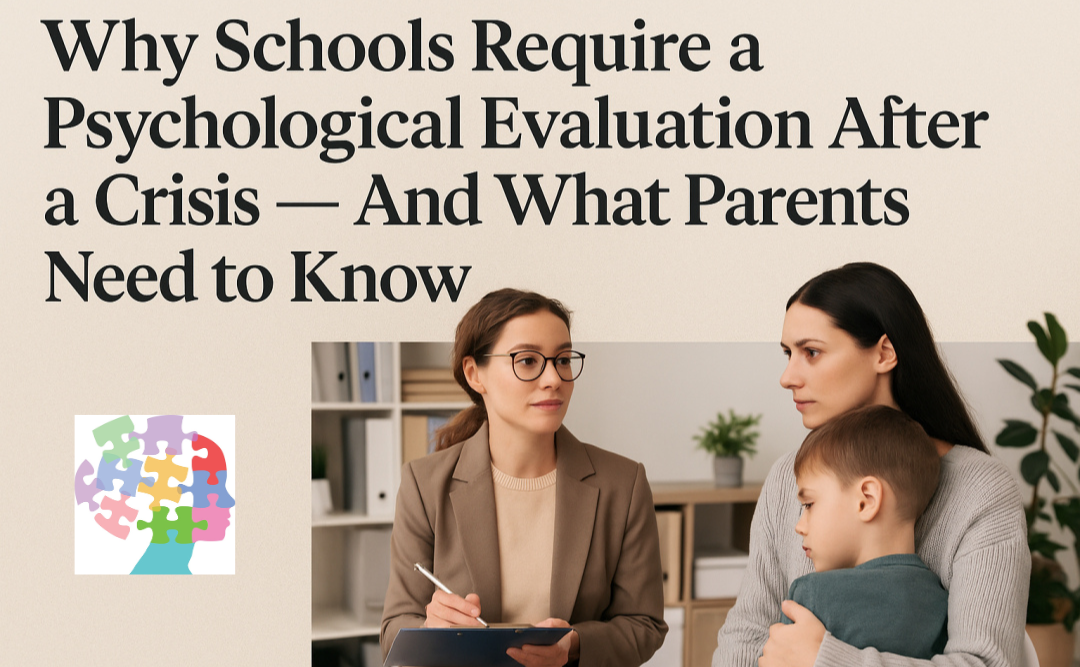
This guest blog from Open Minds Psychological e xplains why schools request mental health evaluations after a behavioral or psychiatric crisis and how families can access fast, trauma-informed, school-compliant assessments. Based in Pennsylvania, Open Minds offers 48-hour turnaround times and specializes in school-ready documentation that helps students return to class safely and with support. When the School Says Your Child Needs a Mental Health Evaluation If you’ve received a call or letter from your child’s school saying they can’t return until they’ve had a psychological evaluation, you’re likely feeling overwhelmed, frustrated, and unsure of what to do next. You’re not alone—and you’re not doing anything wrong. These situations are incredibly stressful, especially when you’re navigating them without a roadmap. At Open Minds Psychological, we specialize in trauma-informed, school-compliant assessments. Let’s walk through why schools make this request, what it means for your child, and what steps you can take to get the support you need, fast. As a team of clinicians who’ve worked with hundreds of children and teens in crisis, we understand both the urgency and the emotion behind school-required evaluations. Many of us are parents ourselves—and all of us believe that a child’s future should never be defined by their hardest moment. “I was afraid my child would be labeled forever. But instead, she felt seen. The clinician actually listened—and the school finally had a plan that made sense.” – Parent, Bucks County According to the American Psychological Association, early re-entry planning after hospitalization significantly reduces school refusal and emotional relapse in students. Ready to get help now? If your school has asked for an evaluation and you’re unsure what to do next, schedule a consultation with Open Minds Psychological today to get clear, expert guidance. Why Schools Request a Psychological Evaluation The Role of Schools in Student Safety Schools have a legal and ethical responsibility to ensure a safe learning environment. When a student experiences a behavioral or emotional crisis—whether that’s a panic attack, aggressive outburst, self-harming comment, or hospitalization—the school may request an evaluation to understand whether it’s safe for the student to return and how best to support them. Q: Why did the school say my child needs a psychological evaluation? A: They’re making sure it’s safe for your child to return and want expert guidance on how to support them. Common Triggers Psychiatric hospitalization or ER visit Suspensions involving threats or aggression Major changes in behavior or emotional state Self-harm or suicidal ideation reported at school Legal & Liability Factors Schools may also be navigating state guidelines or district policies that require formal documentation from a licensed professional before readmitting a student after a behavioral or psychiatric crisis. What Is a High-Risk Psychological Assessment? A Focused, Trauma-Informed Evaluation Unlike standard psychological evaluations, a high-risk assessment is designed to evaluate immediate concerns about a student’s emotional and behavioral stability in a school setting. Q: What exactly is a high-risk psychological assessment? A: It’s a short-term, focused evaluation that checks if your child is ready to go back to school and what support they may need. evaluation that determines if a student is emotionally and behaviorally ready to return to school after a crisis. What It Includes Brief clinical interviews Behavior and risk screenings Review of medical/school documentation Feedback and written recommendations for school reintegration What It Doesn’t Do This isn’t a full diagnostic battery—it won’t label or pathologize your child. Instead, it aims to answer two questions: Is it safe for your child to return to school? What support will help them succeed when they do? Looking for ways to support your teen during this process? Explore our therapy for adolescents page to see how ongoing therapeutic support can help your child feel understood and regain confidence. How to Request a School-Compliant Evaluation: Step-by-Step Get the school’s referral or request in writing – This is usually an email or letter stating that an evaluation is needed. Contact a licensed child psychologist – Prioritize providers experienced in school settings and turnaround within 24–48 hours. Prepare documentation – Include hospital discharge notes, school communication, or prior evaluations. Attend the assessment appointment – Bring your child, and ensure time for both parent and child interviews. Submit the evaluation report to the school – The clinician will provide a formal letter with return-to-school recommendations. Additional Parent Questions (People Also Ask) Q: Can I use my own psychologist instead of the school’s? A: Yes, you can choose your own licensed provider—as long as their report meets the school’s requirements. Families have the right to choose their own licensed provider, as long as the evaluation meets school documentation standards. Q: What if the school pushes back on our evaluation? A: Ask them why—it’s often a formatting issue, and the clinician can usually revise it to fit their policy. to clarify their requirements. A clinician can often revise or supplement the report to meet district criteria. Q: How fast can we get this done? A: Open Minds can usually schedule and complete the full evaluation—including paperwork—within 48 hours., we typically complete high-risk evaluations within 48 hours—including written documentation for the school. Take the next step today: Schedule an appointment or call us to get your child on the path back to school. For a deeper, step-by-step walkthrough, visit our full Psychological Evaluation Guide.

Thank you to our friends at InStride Health for this guest post! At its core, perfectionism is the tendency to have very high standards for ourselves or others. Not all perfectionism is harmful. Research shows that some perfectionistic behaviors are useful and help young people reach meaningful goals. This adaptive form of striving pushes kids and teens to work hard, take pride in their efforts, and stay flexible when things don’t go exactly as planned. The trouble begins when perfectionism becomes driven by anxiety, guilt, fear of judgment, fear of failure, and shame. Often individuals engaging in problematic perfectionistic behaviors experience fixed thinking and unrealistic expectations. These internal pressures can be relentless and emotionally exhausting, fueling self-criticism, procrastination, and avoidance. And instead of helping kids grow, they slowly shrink the world they feel comfortable living in. Here are some ways problematic perfectionistic behaviors can show up in a young person’s life. School and the Pressure to Get Everything Exactly Right Academic settings are a breeding ground for problematic perfectionistic behaviors. A young person might feel a need for things to be done in a very specific way, redoing steps or checking their work repeatedly to relieve the discomfort of imperfection. Others may delay starting work because beginning feels risky, or finish a task and avoid turning it in because it isn’t perfect. Over time, school becomes less about learning and more about controlling outcomes. Social Life, People-Pleasing, and the Fear of Being Seen Imperfectly Social situations are another area where problematic perfectionistic behaviors can show up. Some young people might overthink what they say, rehearse conversations, or avoid certain social situations altogether. Others become chronic people-pleasers, feeling they need to always be agreeable or helpful. Fears of being judged, embarrassed, or perceived negatively can make them feel they must present a “perfect” version of themselves at all times. This limits friendships, prevents authentic connection, and makes everyday social interactions, like starting conversations, meeting new people, or speaking up, feel stressful. Hobbies, Creativity, and the Loss of Play Perfectionism doesn’t just affect academics or relationships; it can drain the joy out of hobbies and creative activities. Kids and teens may pull back from or even stop doing the things they love, like drawing, playing music or sports, participating in plays, or trying new things because they feel pressure to be the best. They are scared to even try out of fear that they won’t excel right away or become a star, and their world becomes less playful and curious and more fear-driven. Decision-Making and the Fear of Choosing Wrong Another place problematic perfectionistic behaviors show up is in decision-making. Buying gifts, picking out clothes, or deciding where to eat can start to feel overwhelming. Young people may spend so much time thinking through options and trying to find the “best” one that they freeze, avoid choosing, or hand decisions off to others. Avoidance becomes a way of staying “safe.” If they don’t choose, they can’t choose wrong. Unlearning Problematic Perfectionistic Behaviors Because problematic perfectionistic behaviors are learned, they can be unlearned, with the right evidence-based support and practice. At InStride Health, we help young people understand that targeting these behaviors in treatment isn’t about lowering expectations or giving up on values like hard work or trying their best. Instead, it’s about teaching them to notice and name these behaviors and associated thoughts and emotions and then choosing new, more flexible ways to respond. This work includes tolerating imperfections and uncertainty through exposures, engaging with thoughts more flexibly, and building genuine self-compassion. As perfectionism loosens its grip, young people can rediscover the confidence, curiosity, and freedom to try things without needing them to go perfectly. And their world expands again.

6 Common Special Needs Planning Missteps & How to Avoid Them Guest Post by Pat Bergmaier, CFP®, ChSNC® Over the years, I’ve met many well-meaning, loving parents who mistakenly assume they’re “all set” when it comes to handling the unique financial needs of their child with special needs, only to find out later that they’ve missed a key step. It’s understandable, but these situations can often be avoided with some proper planning help. Here are some frequent planning missteps to be aware of that could impact the financial future of your child or family member with special needs.
Thank you to Dr. David Danish, President and Psychiatrist at Philadelphia Integrative Psychiatry and Chris Smith, Board Certified Behavior Analyst and Licensed Behavior Specialist for answering this parent question.